|
Cowan Chuck in USE
TESTIMONIALS:
I ordered this as an accessory for socket drive hand tools, simply to collect some attachments
for those. Well, first I had to ask myself if there was such a thing to look for it. Now I finally got around to using this
Cowan Chuck for something. I think it's good for countersinking holes by hand, when attached to a socket spinner
(screwdriver type handle). I'd found one with a 1/2 inch drive from VIM tools. The point is, I wouldn't want to attempt
that with a power hand drill in thin materials, and this lets me drill the countersink very carefully, without having a
drill press. Steven Buchanan ~~~~~~~~~~~~~~~~~~~~~~~~~~~~~~~~~~~~~~~~~~~~~~~~~~~~~~~~~~~~~~~~~~~~~~~~~~~~~~~~~~~~~~~~~~~~~~~~~~~~~~~~~~~~~~~~~~~~~~~~
Hi, Just received the impact wrench drill chuck that I ordered from
you and wanted to just let you know how impressed I am with it.
The thought of drilling with an impact wrench never
crossed my mind and since I am a real fan of unique specialty tools, I was quite curious, although quite skeptical. Since
I had a very unique drilling situation where an ordinary hammer drill would not fit, I thought I would gamble and give your
product a try. WOW!!!!!!!!, as the old saying goes, " The Best Thing Since Sliced Bread." It worked even better
than my greatest expectations.
Thanks so much for offering such an ingenious product.
Bill ------------------------------------------------------------------------------------------------------------
Hi John,
Wanted to let you know I used the chuck to drill several holes in concrete and it worked great! I was using a
regular drill before and I tell you, when you hit a rock it takes a good while to get through. I didn't want to invest
in a hammer drill for the amount of holes I needed to drill but with your chuck and my impact WRENCH :-) I was able to get
the job done in no time. You have a great product!!!
Thanks,
Victor Q.
Fresno, CA
~~~~~~~~~~~~~~~~~~~~~~~~~~~~~~~~~~~~~~~~~~~~~~~~~~~~~~~~~~~~~~~~~~~~~~~~~~~~~~~~~~~~~~~~~~~~
Hi John,
Thank you for your comment:
I purchased the ½ inch chuck
about 2 years ago, so I know my feedback is a probably not going to be mentioned. I put this on my Ingersoll Rand electric
impactool 8049. The chuck failed miserably to drill a 3" deep hole on a patio for a post base anchor bolt. And, no
my tool wasn't malfunctioning. It couldn't hold the bit at all. In fact the bit got stuck in the hole because the
jaws got stuck & wouldn't clamp down on the bit. In my opinion the chuck adapter is trash. I hope you post
this on your feedback page verbatim, as you claim.
Reply:
I looked up your order. I see you bought
a 1/2" chuck for a driver back in March 24, 2013. You do not have a driver, you have a wrench. You see? You bought
the wrong one. Impact wrenches are more powerful than impact drivers. That is why most impact drivers are rated in Inch.pounds,
while impact wrenches are rated in Ft,.lbs. Had you bought the right tool for the job, the Impact Wrench Cowan Chuck, the
outcome would have been much better. I guarantee it would not have failed.
Thank you,
John
~~~~~~~~~~~~~~~~~~~~~~~~~~~~~~~~~~~~~~~~~~~~~~~~~~~~~~~~~~~~~~~~~~~~~~~~~~~~~~~~~~~~~~~~~~
I just
recieved my chuck adapter in the mail. It is awesome.
Just so you know what application I am using
it for.
I use a Milwaukee 28V impact wrench as part of my tool kit when I go offroading.
By adding your chuck adapter to it, it gives me a very powerful (300 ft/lb) drill, for a nominal cost. To buy the Milwaukee
drill to go with the 28V system would have cost me another $377. This is a much more compact solution as well. Thanks for
making such a great product. Johannes
comment: These chucks are just what I was looking for. They are
well worth the money. I ordered one for my 1/2 inch Impact Driver and got it quickly in the mail. Now I have ordered one for
my 3/8 Impact. E-mailed info to my brother.
David Renegar
I appreciate your reply to my purchase. Isn't the web wonderful. I am 60 and to
be able to go my PC and ask a question and get an answer is truly great. I am in process of remodeling my concrete front porch.
I knew I would have to drill in my old concrete to put fresh concrete. I have two (2) impact wrenches but no hammer drill.
Hammer drills are expensive and when I found the adapter you sell, I did the happy dance. Thank You Earl
Recived chuck today. Used in old concrete w/reinforcing
wire. Used 3/4" masonary bit necked down to 1/2". Outstanding job. Best tool I have bought in a while. Like
the 4 detent inside chuck, don't have to posistion chuck, just stick it on.
Thanx,
Earl Wiseman
Bee Branch, AR
Hi John,
I have a 3/4 Chicago
and a 1/2 drive Ingersol that I told you makes 1,000lbs of torque, I've snapped a lot of tools over the years but I have
yet to tear apart the two chucks I bought from you.
Somehow I think breaking any of your equipment would be pretty tough.
Tell you one thing I bought that 3/8-inch chuck and clipped on my 3/8-impact wrench. It is a real part saver working on my
Hayabusa and my Intruder. I've avoided beating up hex and Phillips screws in alloy components that breaking the screw
would have been a nightmare of engine disassembling proportions. I promote that thing to my friends every time we work on
the bikes. You certainly do build some nice equipment.
David Szibel
Greendale, WI
Hi John
I have received the chucks and they are fantastic. I have already completed a couple
of outside projects using the cordless impact in combo with your chuck. Drilling the concrete was no problem and I did not
need to run the cable for the corded hammer drill !!!!!!!!!
Thanks again for an excellent innovative product.
Very best regards
Roger
Roger Grey - GDS
Sandvik Coromant US
Fair Lawn NJ
John,
I wanted to let you know that I received my chuck,
and its perfect, just what I wanted.
Thank you for your time & help with this purchase, I am over the moon.
Kind Regards,
S Dilley
Northampton
United Kingdom
Hey John, I received both chucks and
used my “work” one the other day to drill out a lock pin while recoding an ignition lock, worked great on my electric
impact. thanks, good stuff
Colin Seeliger
Coquitlam British Columbia
Canada
Thank you for
the crazy fast shipping!! I just received the chuck and hooked it up to my dewalt 1/2" impact with a concrete bit
and all I can say is Amazing!! I will be stress testing it on a remodel job next week and will let you know how it holds up
but I just thought I would let you know how much I appreciate the fast shipping and the very imformative email I received
after my purchase. For less than 40 bucks after shipping, if they hold up (and I'm sure they will...the chuck is far from
cheap in appearance and exudes quality), I will be ordering several more. Thanks again and have a great day!
Thomas
Morse
Crawfordville, FL
Hi John, The chucks arrived today (8 days total!). The postal time was actually very good, based on priority Ebay items that I
have received from the southern US. I was pleased to find
them after searching and only finding standard ¼” hex chuck adapters. With a ½”
drive on the impact driver, it made sense to me that an adapter chuck should fit on directly, but, thankfully you already
came to that conclusion. I tried one with a ½” drill bit and found that the
chuck certainly self-tightens further under impact, but loosens easily when reversed under power. These
are great tools and thank you for the quick service. Don Hill.
Toronto Ontario M1N 3A7
Canada Hey John,
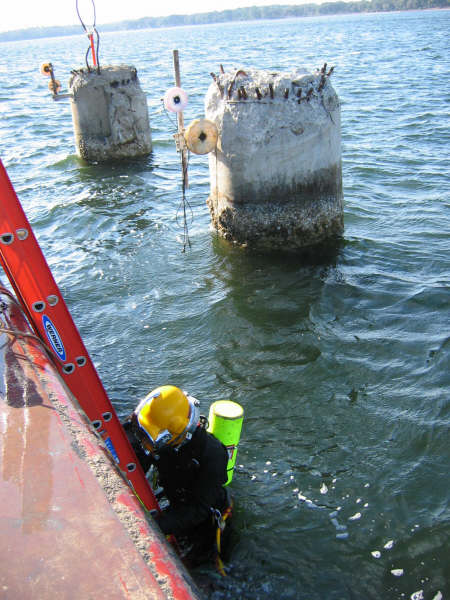
Here are a few pictures from the project, we are cutting
out some older bridge piers and using the impact to drill anchoring holes for the wire saw bracket and as stoppers (so the
wire does not ride up out of the area we want cut)
The chucks are working great!! Holding up very well to our abuse.
Talk to you soon,
Jeff
Hi there Jeffrey, Thank you so much for the pictures. They look great!
Can I have your permission to display them on our web site? John John R. Cowan CEO J R COWAN Mfg.
Hey John,
Of course you can use the pictures, feel free to use the RMEDIVER Commercial Diving name as well as we fully endorse your
tool!!
Jeff
Jeffrey M. Lane
President
RME-Diver Commercial Diving LLC
7547 Holly Circle
unit A
Panama City, FL 32408
Office - 850-249-0101
Cell - 850-867-0364
Fax - 850-233-2806
www.rmediver.com
Diver Nolan ready to start a saltwater dive with an impact wrench and our Cowan Chuck attachment.
Diver Nolan entering saltwater with an impact wrench and
the Cowan Chuck (below). Nolan is about to drill bracket holes underwater in the shown concrete pillars.
(below)
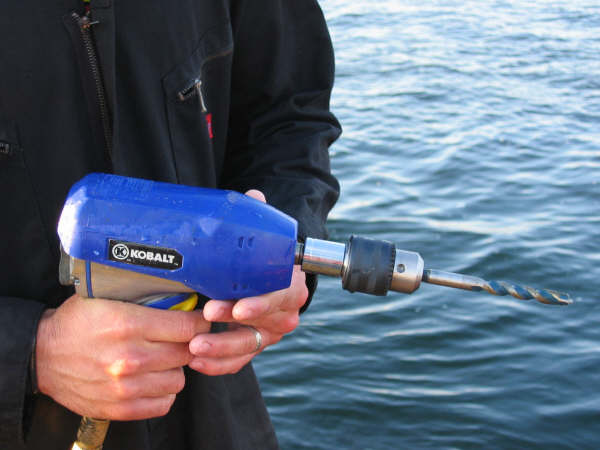
Post dive. Nolan shown holding the impact wrench with the Cowan Chuck, obviously pleased with its underwater performance.
(Below) Saltwater can be seen on both the Cowan Chuck and the impact wrench, post dive.
 ------------------------------------------------------------------------------------------------------------------------
Hi John,
I'm on the road in my RV (5th wheel) and using your
chuck every time I park for the night. The chuck is working beautifully and has eliminated a lot of work for me. I don't
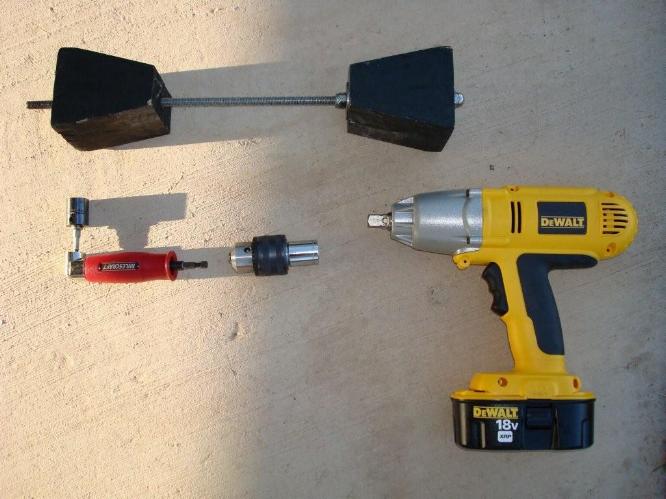
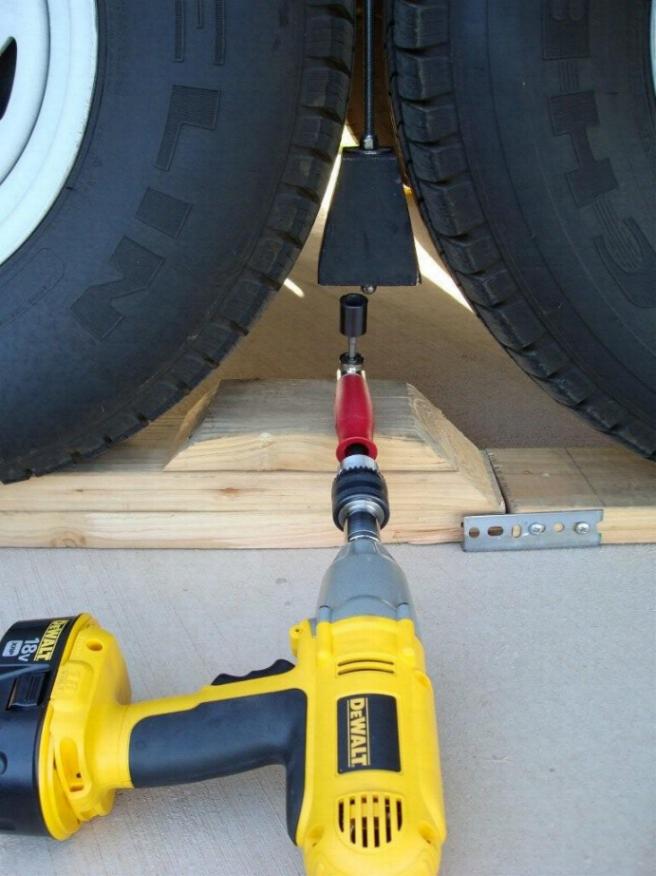
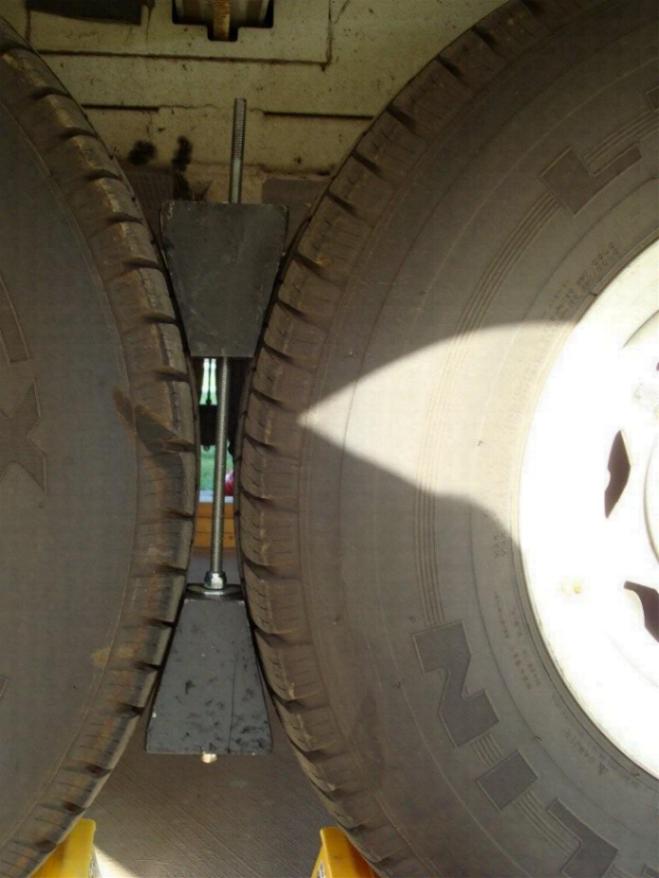
know if I told you what I'm using it for but picture a dual axle 5th wheel where the tires have only about 1.5 inches
of clearance between them. To make the rig more stable when parked, I've made a device of two triangular blocks of wood
with a 3/8" threaded rod going through them. I place this between the tires with one block pointing down from the top
and the other pointed up from the bottom. The threaded rod had a cap nut on one end (the bottom) and a fixed nut on the top
(can't think of the name but it has 3 points that push into the wood to hold it in place). The clearance from the ground
is small. I got a 90-degree attachment from Lowe’s that I fastened to your chuck. Then I put the chuck in my 1/2"
DeWALT 18-volt impact wrench. In seconds I can tighten these two blocks of wood together to lock the wheels in place so the
rig is more stable. Thanks for the chuck. I'm sure I'll find other ways to use it but for now, it's worth its
weight in gold to me.
Larry
   --------------------------------------------------------------------------------------------------------------------------------------------------------------------------------------------------------------------------------------------------------------------------
Hi John,
I have a new use for your Cowan Chuck I
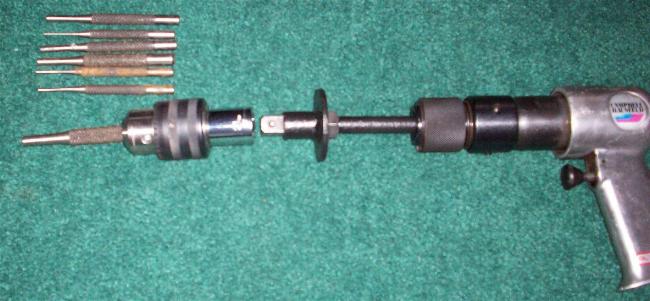
would like to share. The air impact hammer shaft I made years ago with a large washer as a shield for blow back from rust
and scale is shown in the picture below. I use this tool on my air impact hammer to loosen rusty bolts and
turn with a wrench the large nut behind the washer. You would not need to have the shield or nut , just have the
1/2 in male extension with the locking pin cut and welded to the end of the hammer's impact shaft. As
you can see the hole in your chuck now accepts the 1/2 inch male socket with the locking pin and will not allow the
chuck to fall off.
As you can see I can now use your chuck to insert many types of nail
sets to use in my air impact hammer. Just the tool for drilling and punching out parts all in one. I'm a happy
camper.
Thanks,
Steve
 ------------------------------------------------------------------------------------------------------------------------------------
John,
Tested the chuck on concrete, brick etc. Like a hot knife through butter. After years of blisters
and burnt bits, I had the solution under my nose (I have had a compressor and impact wrench for many years).
Regards
Ray L.
Phoenix, AZ
------------------------------------------------------------------------------------------------------------------------------------
You list several great “Cowan Chuck” features, but there's one benefit missing that I find very important.
In fact, it's one of the main reasons I almost always grab my impact wrench instead of my hammer drill...
The
impact drill transmits a lot less torque shock to my hands, wrists and arms. A LOT LESS. Not only can I drill holes more efficiently,
but there’s far less fatigue! I'm sure that translates to fewer injuries, both acute and repetitive.
Regards,
Fred O.
Los Feliz, CA
------------------------------------------------------------------------------------------------------------------------------------
comment: This is a very good idea for an electrician's new way of using tools.
I HAVE BEEN LOOKING FOR THIS
TOOL FOR 16 MONTHS!
Albert M.
Los Angeles, CA
------------------------------------------------------------------------------------------------------------------------------------
This chuck is amazing the way I can drill through walls when I am repiping. Wall studs and plaster is like soft butter.
Thanks for coming up with this cool tool!
Yochin Plumbing
San Fernando, CA.
------------------------------------------------------------------------------------------------------------------------------------
comment: I have used two of your chucks for the past month and can highly recommend them. They are of high quality
and operate smoothly when tightening or loosening a drill shank.
Thank you.
John K. Carlson
Kingsville,
TX
------------------------------------------------------------------------------------------------------------------------------------
This is a great tool to have at new construction sites. When we don't have electricity yet, I still can drill
holes using my gas powered engine compressor and your chuck. Great tool!
Harold A.
Klamouth Falls, OR
------------------------------------------------------------------------------------------------------------------------
Colleen wrote:
I am past the warranty period,
but I would like some advice. I used my Cowan Chuck for the first time today. When I finished drilling I could
not open the jaws using the key. It is absolutely stuck. Is there some way I can get the jaws to open and release
the bit?
Thank you.
Colleen
Erbel
J R COWAN Mfg. replied:
Thank you for your email. One of the characteristics of the Cowan Chuck
is that it clamps down on the bit rather than becoming loose as a hammer drill does. There are 2 very simple ways
to loosen the chuck. The easiest is to just drill in reverse in the hole you made. The second way is to set the socket part
of the chuck on a flat surface so as to stand it upright. Insert the key into the chuck. While holding the key into the chuck
with your left hand, tap the key with a hammer using your right hand. Please be careful not to hit your left hand, because
that smarts. Also make sure you are turning in the correct direction.
I hope this helps you.
Sincerely,
John
Colleen responded:
John,
Thank you so much for your quick reply. Your advice worked perfectly.
As I wrote in my previous message, I had just used my Cowan Chuck for the first
time. What I did not say in that message is that the Cowan Chuck worked like a champ..
I was concerned
that it might be difficult for me to use my impact wrench as a drill. I thought that I might not be able to control the drilling
as easily as I can with my regular drill. My concern was unfounded, using the Cowan Chuck was so easy and so fast. What
a great idea.
Thank you
Colleen Erbel
J R COWAN Mfg: replied:
Hi Colleen,
Thank you for your email. I am glad that you are happy with your new Cowan Chuck. Happy drilling!
With your permission, I would like to put your
email on our web site. Sincerely, John
Colleen replied:
Dear John,
Absolutely
you have my permission, I am a fan.
Again, thanks for being so helpful.
Colleen Erbel ------------------------------------------------------------------------------------------------------------------------------------
COMMENT:
It would be interesting to see a video of your impact wrench chuck working on a corded or cordless electric
impact wrench.
Besides drilling, another use of your chuck might be to drive a planting augers such as those made
by "Yard Bulter" http://www.amazon.com/Yard-Butler-RP-3-2-75-Inch-Diameter/dp/B000S61YO2/ref=sr_1_4?ie=UTF8&s=home-garden&qid=1270314387&sr=8-4
A gardener would more likely use an electric tool than an air tool.
Reviews
of the planting auger report that the round shaft must be flattened for a chuck to get a good grip on it, so I take that for
granted. An impact tool might twist the users hands less than an electric drill when the auger becomes stuck.
I have used this auger with an electric drill. At a depth of about 18 inches, I find that my Ryobi 3.5 amp drill drives the
auger at a very low speed and the motor of the drill smells like it is overheating. An electric impact tool might do
better.
It might be hard to use the chuck to pull up on the auger bit if the chuck's socket pulls off the shaft
of the impact tool, but I didn't find it necessary to pull hard on the auger since reversing the drill causes the auger
to come back out of the hole easily.
Stephen
Contact Us. Click here.
|